
Nose by type
A nose line that considers
the ratio with individualized
surgical procedures.
Professional plastic surgeons take into
account the patient's unique facial structure
and dimensions when designing a nose
that looks good from any angle.
Cause-specific rhinoplasty that
gets to the root of the problem
After determining the root of the problem,
we adjust the nose's size and shape
to make it seem more in balance with
the rest of the face, using the patient's
own cartilage and skin elasticity.
Surgical Details

Operation
time
1 hour

Anesthesia
method
Sleep
anesthesia

Hospitali
-zation
None

Stitch
removal
about
7 days later

In-hospital
treatment
1-2 times

Recovery
period
about
7 days
The several nose
cases
that examined
certain facial features
HUMP NOSE

It is when the nasal bone and nasal septal cartilage have grown
excessively, raising the middle portion of the nose's bridge,
the glabella seems low and the nose's tip appears to be somewhat sagging.
Depending on the particular causes, The protruding portion of
the nasal bridge may be eliminated by nose osteotomy, and the line of
the nose tip may be smoothed to create a beautiful line.
BULBOUS NOSE
It describes a nose in which the bridge of the nose seems flat
and the breadth of the tip appears to be substantially bigger
than the width of the bridge. The size of the nostril, skin thickness,
and shape are all carefully taken into account before surgery
because the tip of the nose is widened and appears blunt for a variety of
reasons. A solution is then found in line with the balance to finish a pretty
and sophisticated line that matches the balance of the face.
LONG & ARROW-SHAPED NOSE
Arrow nose is a type in which the tip sags abnormally compared to
the rest of the face, falls down far enough to look like an arrowhead,
and is long enough to cover the philtrum. The alar cartilage at the tip of
the nose that lengthens or descends is excised, and the tip of the nose
that sags downward is straightened and made taller.
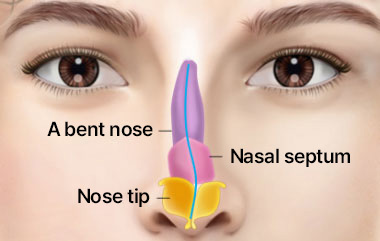
BENT NOSE
This is a type of nose where the bridge is tilted to one side
rather than being straight. In addition to the bones on the nose's bridge,
the bones within the nose are also likely to be bent a long
with issues like nasal congestion, rhinitis, and headaches.
The function of the nose must also be taken into account
while shaping it to be straight.
WIDE NOSE
The bones that make up the nose's bridge are broader,
and the overall structure of the nose has a flat appearance.
By narrowing the nasal bone, it is vital to address the external issue,
and surgery must be done to preserve the functional portion of
the nose for proper breathing as well.
SHORT & UPTURNED NOSE
Short nose/upturned nose refers to a situation where the nose is short
and the nostrils are excessively exposed from the front.
The tip of the nose is lowered to naturally enhance the lifting of the tip
after the soft tissue and length of the nose will be extended to a line
that does not damage it. It is the most complicated and challenging
kind of rhinoplasty, thus choosing a expert specialist is crucial.
HUMP NOSE
It is when the nasal bone and nasal septal cartilage
have grown excessively, raising the middle portion of
the nose's bridge, the glabella seems low and
the nose's tip appears to be somewhat sagging.
Depending on the particular causes, The protruding
portion of the nasal bridge may be eliminated by nose
osteotomy, and the line of the nose tip may be
smoothed to create a beautiful line.
BENT NOSE
This is a type of nose where the bridge is
tilted to one side rather than being straight.
In addition to the bones on the nose's bridge,
the bones within the nose are also likely to
be bent a long with issues like nasal congestion,
rhinitis, and headaches. The function of the nose
must also be taken into account while shaping it
to be straight.
BULBOUS NOSE
It describes a nose in which the bridge of the nose
seems flat and the breadth of the tip appears to be
substantially bigger than the width of the bridge.
The size of the nostril, skin thickness, and shape are
all carefully taken into account before surgery
because the tip of the nose is widened and appears
blunt for a variety of reasons. A solution is then
found in line with the balance to finish a pretty and
sophisticated line that matches the balance of the face.
WIDE NOSE
The bones that make up the nose's bridge are
broader, and the overall structure of the nose has
a flat appearance. By narrowing the nasal bone,
it is vital to address the external issue, and surgery
must be done to preserve the functional portion of
the nose for proper breathing as well.
LONG & ARROW-SHAPED NOSE
Arrow nose is a type in which the tip sags abnormally
compared to the rest of the face, falls down
far enough to look like an arrowhead, and is
long enough to cover the philtrum.
The alar cartilage at the tip of the nose that lengthens
or descends is excised, and the tip of the nose
that sags downward is straightened and made taller.
SHORT & UPTURNED NOSE
Short & upturned nose refers to a situation where
the nose is short and the nostrils are excessively
exposed from the front. The tip of the nose is
lowered to naturally enhance the lifting of the tip
after the soft tissue and length of the nose will be
extended to a line that does not damage it.
It is the most complicated and challenging kind of
rhinoplasty, thus choosing a expert specialist is crucial.
Analyze the reason
precisely
and apply
a surgical method
appropriate
for the type
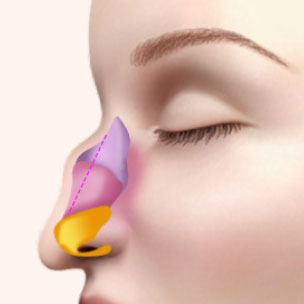
HUMP NOSE01
-
 1
1
Surgical removal of
the nose's
protruding bridge -
 2
2
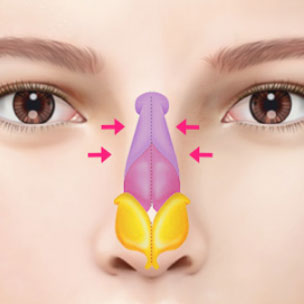
Through lateral
osteotomy, the nasal
bones are brought
to the center. -
 3
3
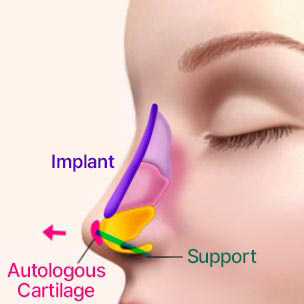
Implant
if the nose's
bridge is low. -
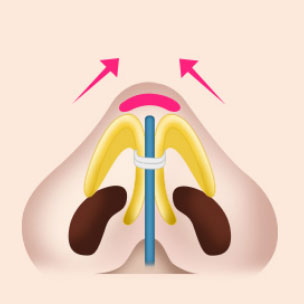 4
4
To avoid sagging,
gather the cartilage
at the tip of the nose
and provide support.
BENT NOSE02
-
 1
1
Removal of the
protruding
nasal bone
and cartilage
transplantation
to the nasal
bone
that is indented. -
 2
2
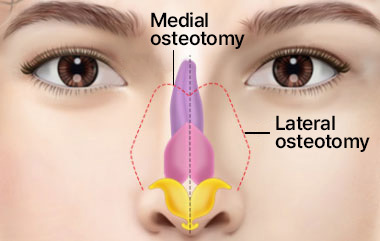
Correction after cutting
or
straightening the
nasal
septal cartilage's
curved
section.
(using an implant
if necessary) -
 3
3
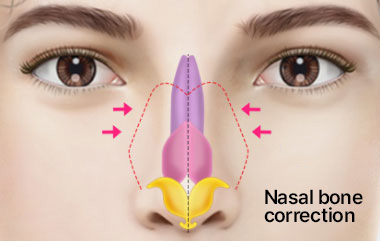
Tie the cartilage at
the
nose's tip to
stabilize it and
then
securely fasten it to
prevent further bending.
BULBOUS NOSE03
-
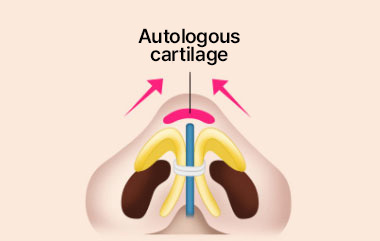 If the alar cartilage
has enlargedFix it by collecting the
spread cartilage in the
center and firmly
attaching it
to the tip
of the nose. -
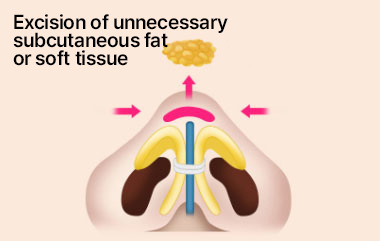 If the tissue at the tip
is thickShape the tip of the
nose
after removing
any extra soft
tissue
at the tip of the nose. -
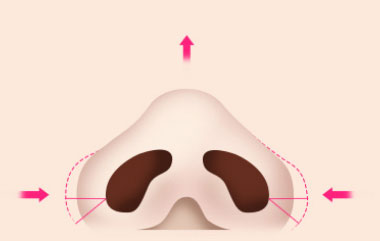 If the alar tissue is broad
(reduction of the nostril)Remove unnecessary
wrinkles and suture
along
the line of the
nostril
and cheek.
WIDE NOSE04
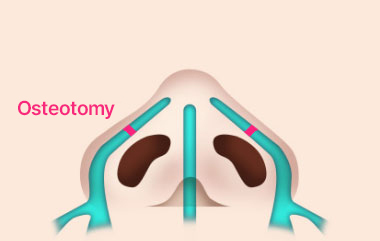
The purpose is to reduce the width by cutting the
wide nose bone,
which is the main contributing factor.
However, since the process of
narrowing the nose
may have an impact on it, the breathing space
must
be specifically located and examined before surgery.
-
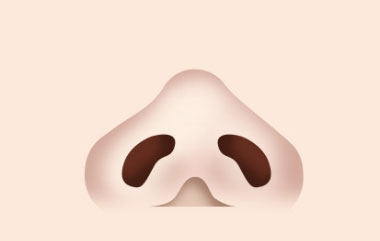 1
1
Analyzing the inside
and
outside of the
nose to
identify the
position and
extent
of the bone that
has to be cut. -
 2
2
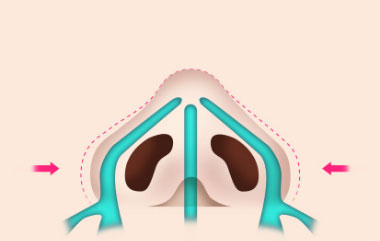
The nasal bone is
constricted inward
after
being cut to
lessen the
breadth of
the bridge of
the nose. -
 3
3
Insert implants or
perform
nose tip
surgery or alar
reduction if necessary.
LONG∙ARROW-SHAPED NOSE05
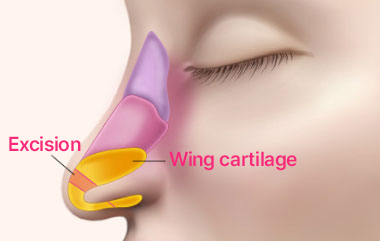
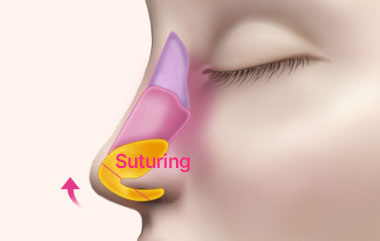
The tip of the nose will sag once again if the
problematic cartilage is
not adequately
removed or repositioned. By firmly fastening the
cartilage that contributes to a long∙arrow nose and
completing it, we reduce the risk of recurrence.
-
 1
1
Remove the sagging
nasal
septum and the
appropriate
quantity
of unnecessary
wing
cartilage. -
 2
2
Firmly fix the nose tip
after
lengthening the
alar cartilage
and
nasal septum. -
 3
3
Fine perfection is
enhanced
by improving
the form of
the nasal
passageways,
philtrum,
and nostrils.
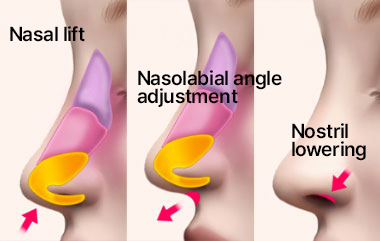
SHORT ∙ UPTURNED NOSE06
After clearly determining the reason and degree of
the type and quantity of autologous tissue,
the length
of the tip of the nose is prolonged using
chondroplasty/cartilage
transplantation, and if
required, the length of the shortened
nose is
lengthened using implants and autologous tissue.
-
 1
1
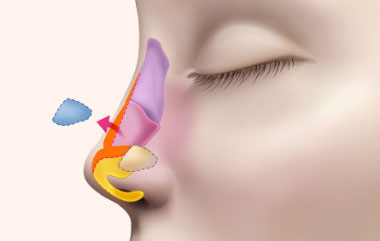
Separating alar
cartilage
gathered from
the inside of
the nose
from nasal bridge
cartilage. -
 2
2
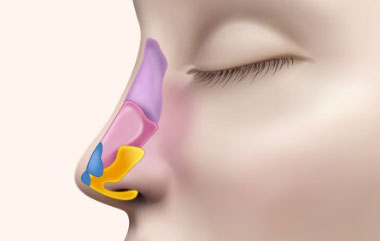
Extending and
transplanting
the wing
cartilage into
the gap
created by the
separated cartilages. -
 3
3
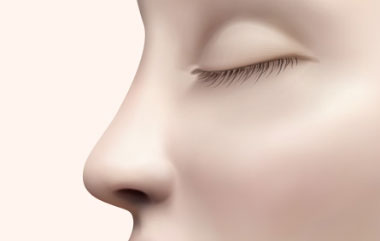
Extending the length
of the
nose by securely
fixing the
stretched
cartilage and lifting
the
bridge of the nose.
Personalized safety plastic surgery
based on skilled experience
Personalized safety
plastic surgery based on
skilled experience
3D VECTRA
Design prediction using
3D super-resolution faceline scanning
In order to develop an appropriate height and form,
3D Vectra,
a cutting-edge analysis tool, carefully
examines numerous elements
such the present
appearance of the complete face, the breadth of
the forehead, and the degree of protrusion of the
forehead and chin.
Straight from the front, smooth
from the side, and attractive from
any and all angles,
I t completes a line that is suitable for each person.

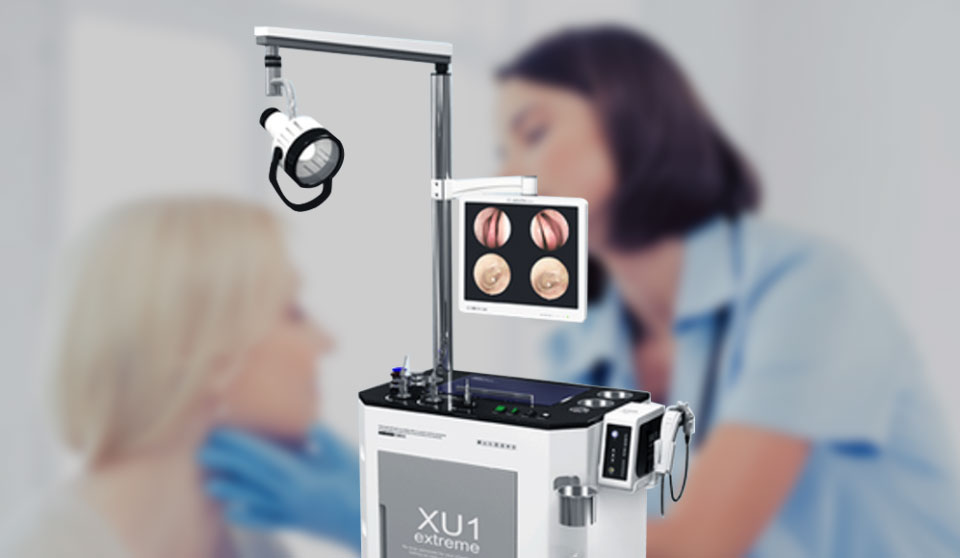
XU1 ENDOSCOPE
Detailed surgical strategy that fully
understands the internal anatomy of
the nose even in its unseen areas
At the same time, functional illnesses are improved
by using
cutting-edge endoscopic technology
that can precisely see
inside components
that are undetectable to the human eye.
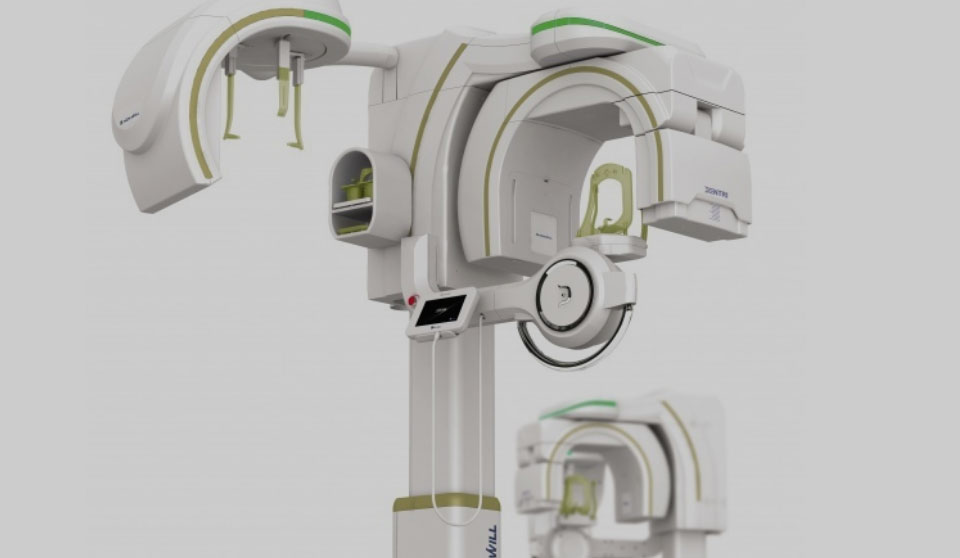
3D-CT CHECKUP
Detailed surgical strategy that fully
understands the internal anatomy of
the nose even in its unseen areas
By using 3D-CT imaging, it is able to accurately
compare
the pre-surgery and post-surgery
outcomes and comprehend
the specific bone
structure that differs from what it seems to
be on the exterior.
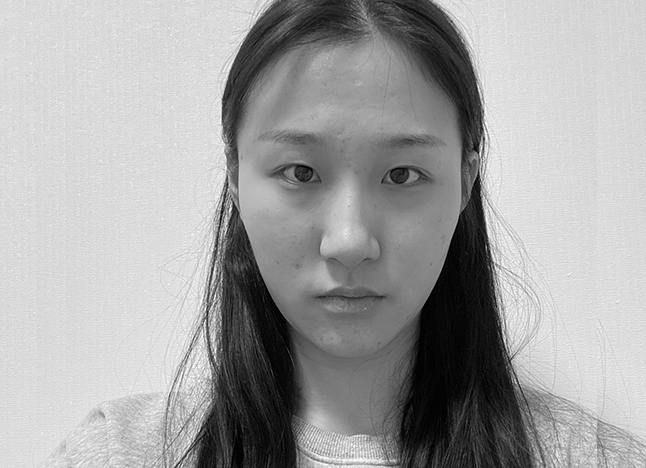
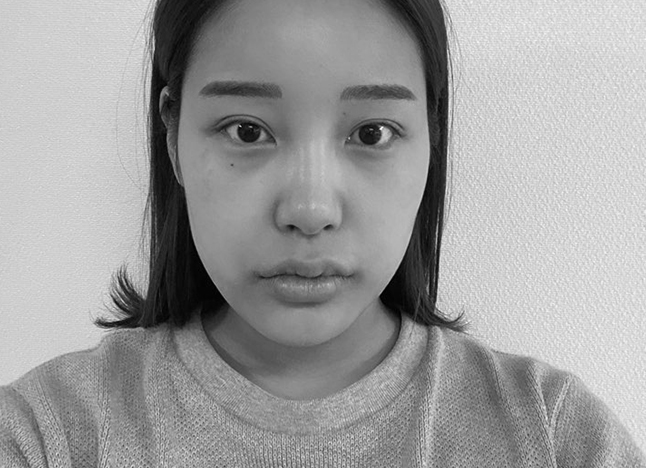
Unadorned
before and after
photos of the
changed me
View More


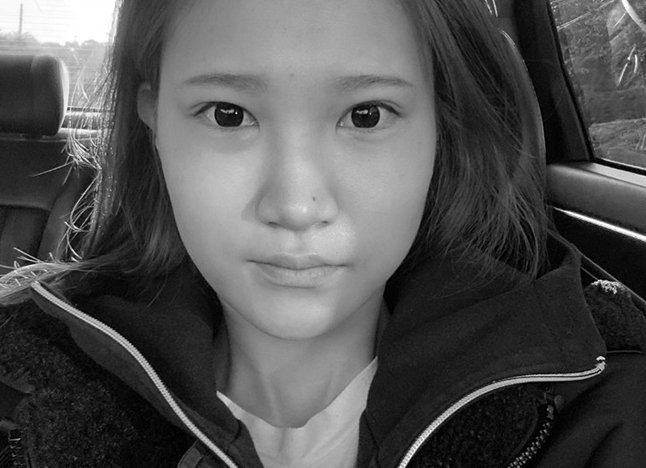



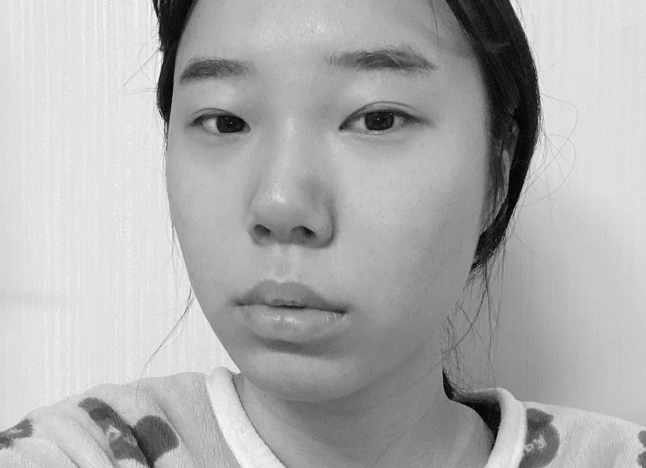

Meet us with
various contents.
Eight Youtube
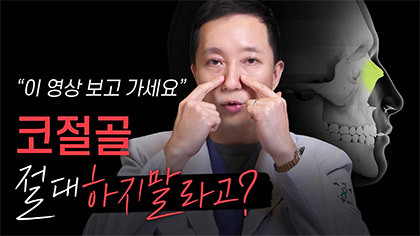
When you have a nose operation,
you have to have a nose cut
Dangerous and ineffective?

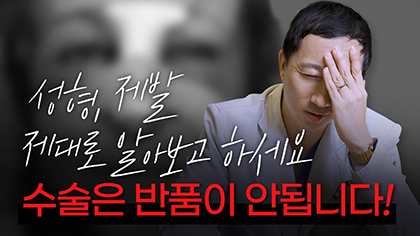
You cannot return
the nose surgery
even if you are not satisfied with it.
Inflammation. Is the doctor at blame,
or is it the patient?
Side Effects of Rhinoplasty Part 1
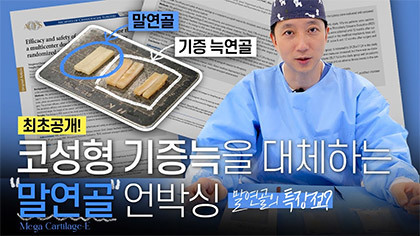
Nose plastic surgery, horse cartilage
instead of donated rib cartilage?
Unveiled horse cartilage for the first time

Smoking is permitted after rhinoplasty.
But don't let the doctor
use them as an excuse!